
04/20/2023: Zhange Ni, “Gender, Sexuality, and Digital Immortality”

On April 20 at 7:00 pm, in the Reading Room of Cowles Library, Zhange Ni, Associate Professor of Religion and Literature at Virginia Tech University, will lecture on “Gender, Sexuality, and Digital Immortality: What Would Women’s Fantasy Novels from Contemporary China Contribute to Transhumanism?”

Zhange Ni received her Ph.D. in Religion and Literature at University of Chicago Divinity School (2009). She is currently an associate professor in the Department of Religion and Culture, Virginia Tech. She was a research associate of the Women’s Studies in Religion Program at Harvard Divinity School (2010-2011) and a research fellow at theNantes Institute for Advanced Study in France(2021-2022). She has published The Pagan Writes Back: When World Religion Meets World Literature (2015), Religion and the Arts in The Hunger Games (2020),  and articles in journals such as Journal of ReligionJournal of American Academy of ReligionLiterature and Theology, and Zygon: Journal of Religion and Science. She is working on a new book manuscript, tentatively entitled The Cult of Fiction in the Age of the Internet: Chinese Religions, Digital Capitalism, and the Fantasy Boom in Contemporary China. One particular popular genre she has been studying is “immortality cultivation” (xiuzhen, 修真), which encapsulates transhumanist imaginaries with Chinese characteristics.

“Female Alchemy in an Informatic Cosmos: Religion, Gender, and Transhumanism in Chinese Women’s “Immortality Cultivation” Novels. ”Contemporary China, a major player in the global game of digital capitalism, is witnessing a boom of genre fiction produced and consumed in an interactive online environment. One of the most popular genres is “immortality cultivation” (xiuzhen, 修真), a term borrowed from the Daoist tradition of “inner alchemy” (neidan 內丹) and originally referring to the purge of the human body of its imperfection through medicinal, meditative, and moral practices to make it immortal. Immortality cultivation novels today have radically reimagined Daoist alchemy, fusing it with established and emerging bio-digital technologies to enact transhumanist visions of Chinese characteristics. The main difference between American transhumanism—a social and intellectual movement striving to transcend the limitations of the human body, or even any physical form altogether, through technological means—and the Chinese quest for immortality, currently a thought experiment conducted in the realm of popular fiction, is that the latter does not endeavor to abandon the body. Instead, the body is valued as a microcosm resonating with larger environments such as the state and the cosmos. As the body is to be preserved, sexual and other intersectional differences that mark the body are not to be transcended. A separate tradition of “female alchemy” (nvdan, 女丹) aimed at enhancing the female body emerged in the seventeenth century. In the twenty-first century, a particular sub-type of cultivation novels, written and read primarily by women, are grouped under the title “immortality cultivation of the female frequency” (nvpin xiuzhen, 女频修真). These novels conscientiously wrestle with issues of gender, sexuality, and reproduction in their transhumanist imaginaries. They are worthy of our critical attention because they are directly indebted to the efforts made by Chinese alchemists and scientists to merge traditional Chinese cosmology and information sciences. Even more interestingly, these novels may help us to reconcile transhumanism and material feminism that is critical of the mainstream transhumanist rejection of body, nature, and matter. If we adopt an informatic cosmology that truly disrupts the divides between body and mind, nature and culture, matter and spirit, the achievement of immortality does not have to take the “mind deeper than matter” route. Materiality consists of dynamic and indeterminate processes and promises an alternative type of immortality. 

Here is the PPT and audo of Dr. Ni’s lecture:

And here is a video recording of Seth Villegas’s response to Dr. Ni’s lecture:

04/16/2023: Meet My Religious Neighbor: Vaisakhi at Iowa Sikh Association

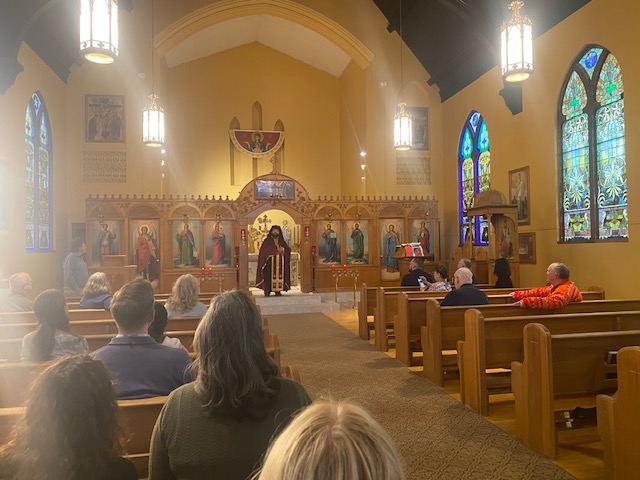
On Sunday, April 16, we will celebrate the annual holiday of Vaisakhi from roughly 12:00 pm to 1:30 pm with the Sikh gurdwara in West Des Moines, the Iowa Sikh Association (1115 Walnut St.).

The service will include many of the elements of a typical Sunday worship service: the signing of hymns (kirtan), reading from sacred scripture (Guru Granth Sahib), community prayers (aardas), and the sharing of the sacred sacrament (karah prashad, the so-called “holy pudding”), after which a free vegetarian meal will be served (langar). Dress modestly, remove shoes at door, and don a head scarf (available at the door for both women and men). Also, refrain from pointing outstretched legs toward the holy book/altar.

02/23/2023: Gereon Kopf, “Transhumanism, AI, and Memory: Zen Buddhist Ruminations on Digital Immortalities”

On Thursday, February 23, from 7:00–8:30 pm, in the Reading Room of Cowles Library, we host our first scholar lecture of the semester in our “Transhumanism, Religion, and Immortality Series.” Gereon Kopf, Professor of Religion at Luther College, will speak about “Trans-humanism, AI, and Memory: Zen Buddhist Ruminations on Digital Immortalities.”

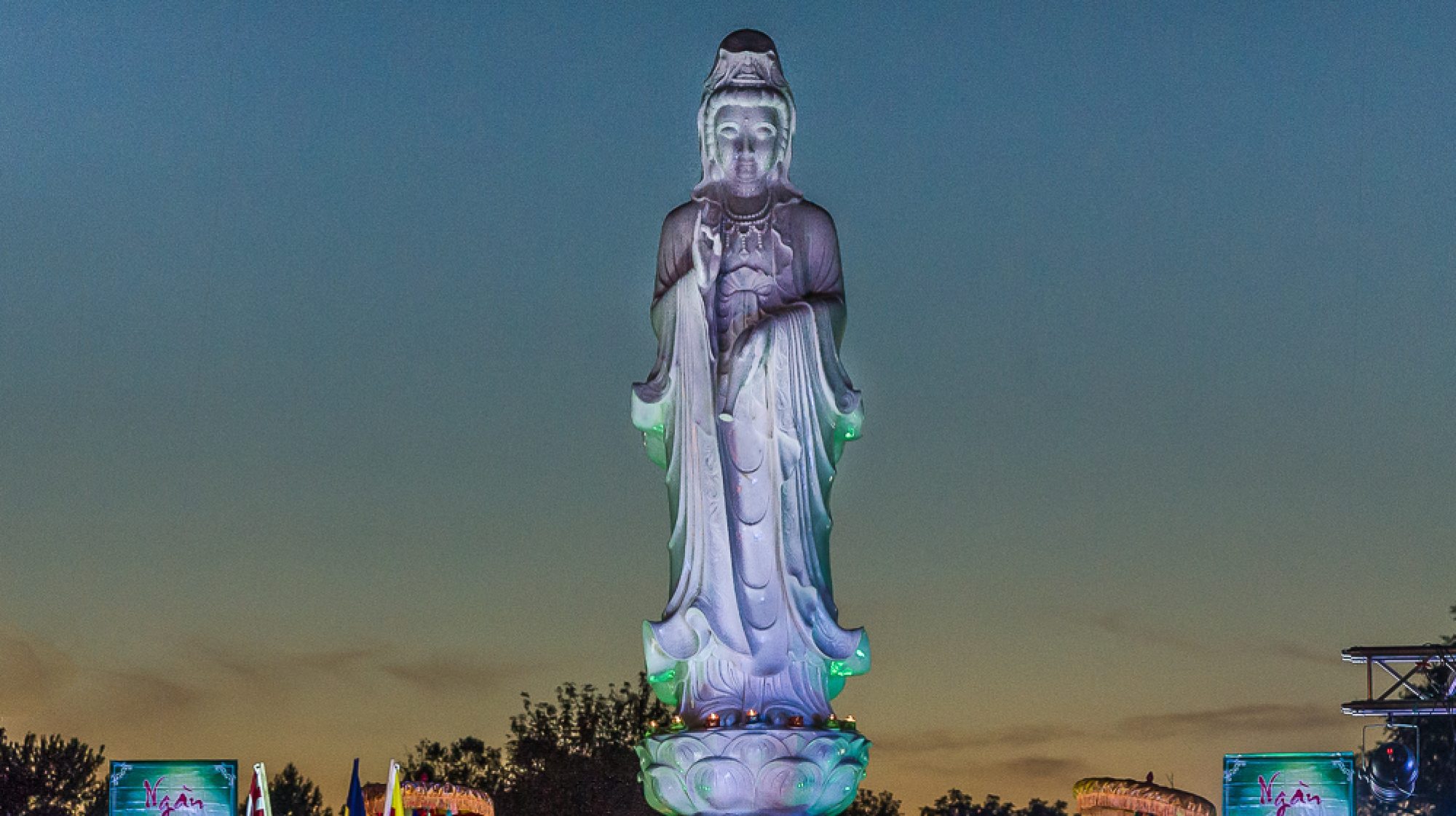
Transhumanism is not a controversial topic in Japanese Buddhism. To the contrary, one could say that many Buddhist texts advance a transhumanistic, or as Masao Abe would say, “de-anthropocentric” worldview. The idea of the six realms of saṃsāra imply that human existence is not separate from but continuous with many life forms. Many forms of Mahāyāna Buddhism believe that the divine, whether it is Kannon Bodhisattva or the Buddha Mahāvairocana, can take one any form, and Japanese Buddhists celebrate memorial service not only for departed human beings but also for animals and objects. Subsequently, it is of no surprise that, in general, Japanese Buddhists are quite open to the idea of digital immortality and trans-humanism. 

In this presentation, I will explore, first, the practice of digital immortality in the context of Buddhist beliefs and practice concerning death and the afterlife in Japan and, second, introduce an innovative heuristic schema based on Japanese Buddhist philosophy to understand digital immortalities and trans-humanism in general. Concretely, my presentation will consist of four sections introducing 1) the context: beliefs and practices concerning death and the beyond in Japan, 2) the new landscape: the role of AI and digital immortality in Japanese religion, 3) the conception of digital memory as 3rd, 1st, 2nd, and 4th person memories, and, finally, 4) the attempt to conceptualize the relationship between AI and human beings. It is my hope that this heuristic schema will contribute to the general discussion on digital immortality in particular and trans-humanism in general. 

Here is a video of the lecture:

https://vimeo.com/815054622

02/19/2023: Meet My Religious Neighbor: Roads to Religion

On Sunday, February 19, from 3:00–5:00 pm, we kick off our Spring 2023 programming with “Roads to Religion,” a two-hour open house at which visitors can meet members of 30 local religious communities collectively representing 10 religious traditions. The event, which is free and open to the public, will be held on the upper floor (Parents Hall) of the Olmsted Center on Drake’s campus. The room will be set up like a map of the metro area, with the participating communities located accordingly. Visitors will receive a map and guide to the communities in the hall. Food and beverages will be served by Drake’s food service. Parking is available in the Olmsted Lot, which is located on the north side of University Ave. in between 28th and 29th Streets.

Thanks to Jim Zeller for all the pics below (except the first one, which is Catalina’s):

Translate »