
11/18/2027: Waleed El-Ansary, “Holistic Work and Islamic Economics”

On Thursday, November 18 (2027) at 6:00 pm in Aliber 101 (2847 University Ave), Dr. Waleed El-Ansary, Helal, Hisham and Laila Edris El-Swedey University Chair in Islamic Studies at Xavier University, will lecture on “Holistic Work and Islamic Economics.”
The title of this talk suggests three questions: 1) What is holistic work? 2) How is it related to Islamic economics? and 3) Why does it matter and why is a new paradigm needed? Turning to the first question, holistic work is work that is spiritually, psychologically, and materially efficacious. It fulfills a hierarchy of spiritual and other human needs, including the need for meaning, self-realization, and participation in the community, and stands in contrast to what I shall term “deformed work,” that is, work that fulfills only materials needs, at least in the short to medium terms. In the long term, deformed work has arguably sown the seeds of dissatisfaction underlying many socio-economic and environmental crises at both national and international levels, as we shall see. Turning to the second question concerning how this subject relates to Islamic economics: a traditional Islamic economy is based on holistic rather than deformed work. This distinction has significant implications for the critique of both industrial capitalism and communism, economic systems structured largely on deformed work as viewed from an Islamic perspective. This distinction, in turn, calls into question some of the foundational assumptions of modern economic theory. Although I discuss the need for a new economic paradigm in the context of Islamic economics, the principles offered in this presentation resonate with the ethical and spiritual concerns of other major world religions. As such, they point toward the need for a broader, interreligious framework to confront shared global crises on the social, economic, and environmental levels. In this way, the significance of holistic work in Islamic economics speaks directly to the third question of why it matters today.

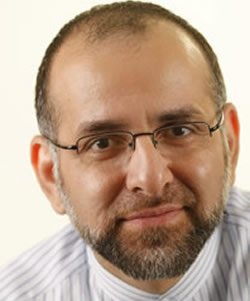
Dr. Waleed El-Ansary is the Helal, Hisham and Laila Edris El-Swedey University Chair in Islamic Studies at Xavier University, where he teaches courses on Islamic studies, Islamic economics, and religion and science. He holds a Ph.D. in Islamic and Religious Studies from George Washington University and M.A. in Economics from the University of Maryland. His research focuses on the intersection of religion, science, and economics. He has authored numerous publications, including “Islamic Environmental Economics and the Three Dimensions of Islam” in his co-edited volume Muslim and Christian Understanding: Theory and Application of A Common Word. His most recent book with Alexis Blum, Grand Rabbi Emeritus of Neuilly, and Bishop Claude Dagens, Bishop of Angouleme, is Know the Religion of Thy Neighbor, which was arranged through the UNESCO-based Aladdin project to help train young rabbis, priests/preachers, and imams (as well as any other interested parties) about the Abrahamic traditions for greater mutual understandi
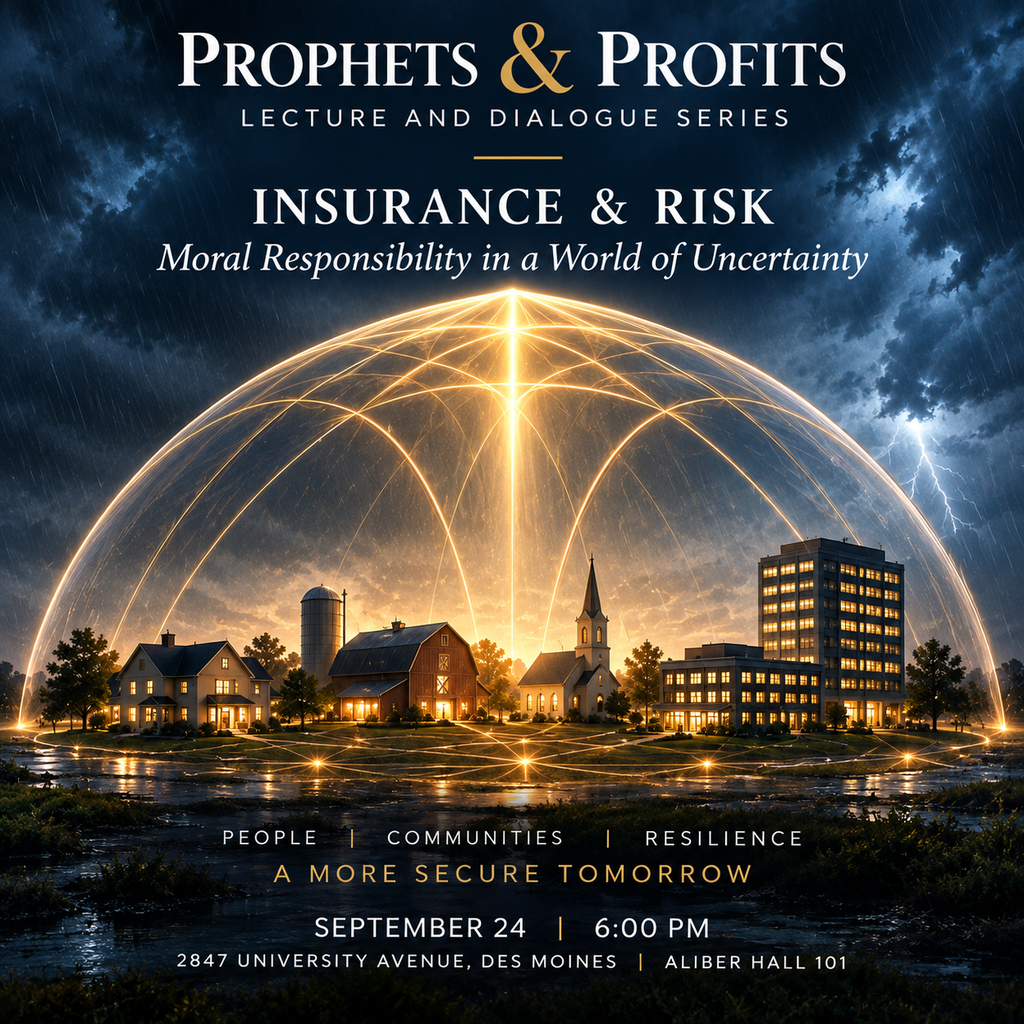
09/24/2026: Panel Dialogue on Religion and the Insurance Industry

On Thursday September 24 at 6:00 pm in Aliber 101 (2847 University Ave), we host our first event of our 2026–2028 series on Prophets & Profits, a panel dialogue featuring local insurance industry executives. We are very grateful to the Joel W. Peterson Trust for support of this event and the entire series.

Insurance does more than calculate probabilities and pay claims. It determines how uncertainty, vulnerability, and financial loss are shared—and who will be protected when catastrophe strikes. Decisions about pricing, coverage, exclusions, claims, and capital therefore involve not only technical and commercial judgments, but also fundamental questions of fairness, responsibility, trust, and human dignity.

This opening panel in the Prophets & Profits series will bring together experienced insurance executives to explore how their personal moral and religious convictions inform the difficult decisions they face as leaders. How do they balance actuarial discipline and financial sustainability with compassion and social responsibility? Are there ethical limits to risk-based pricing, even when it is economically justified? What responsibilities do insurers have to individuals and communities facing risks they cannot reasonably bear alone?

Drawing on both personal experience and professional expertise, the panelists will consider how these tensions shape their leadership, their organizations, the insurance industry, and the communities they serve—especially in a world confronting growing climate volatility, healthcare costs, and interconnected economic risks.

Panelists include:

Scott Jean is President and CEO of EMC Insurance Companies, where he has served since beginning his career as an actuary in 1991. A graduate of Iowa State University, he is a Fellow of the Casualty Actuarial Society and a Member of the American Academy of Actuaries.

Nick Gerhart is Chief Operating Officer of Homesteaders Life Company and previously served as Chief Administrative Officer at FBL Financial Group and Commissioner of the Iowa Insurance Division. He holds a bachelor’s degree from the University of Northern Iowa and both law and health-administration degrees from Saint Louis University.

Christian Walk is Senior Vice President, Legal and Associate General Counsel at Global Atlantic Financial Group, as well as a respected leader in Iowa’s insurance community. An attorney with a divinity degree, he brings a distinctive perspective on the intersection of professional responsibility, faith, and ethical leadership.

Jason Giles is a shareholder at Nyemaster Goode whose corporate practice encompasses insurance, mergers and acquisitions, commercial transactions, governance, and risk assessment. A Drake MBA and law graduate, he is active in his church and religious organizations and previously served a two-year mission in Ecuador.


We are pleased to announce that online/zoom participation in this event is now possible. Here is the link: https://drake-edu.zoom.us/j/89843070727. And here is a QR code for this link:

For those who were not able to attend the event, a video-recording is now available:

11/14/2026: Meet My Religious Neighbor: Diwali

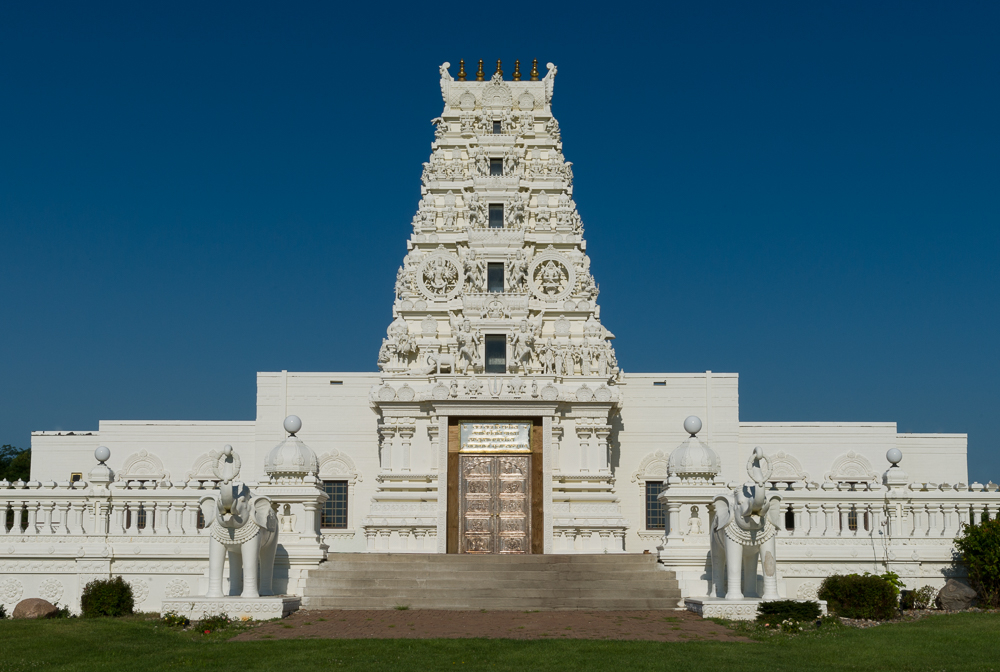
On Saturday, November 14, we will celebrate the Hindu (and pan-Indian) festival of Diwali at 5:00 pm the Hindu Temple and Cultural Center (33916 155th Ln, Madrid).

The pan-Indian “festival of lights,” Diwali celebrates the victory of light over darkness, good over evil, truth over untruth. For Hindus, the holiday is especially associated with the return of Lord Rama to Ayodhya, as well as with Lord Krishna’s miraculous protection of the people of Vrindavan.

The evening begins with Lakshmi Pooja and aarti, followed by cultural performances, diya lighting, and prasadam for all.

Visitors should dress modestly (but celebratory!), remove shoes, and avoid pointing outstretched legs at holy objects or people. Visitors must not take photos of the deity statues (murtis) in the main sanctuary. 

This event is part of the “Meet My Religious Neighbor” series, which is co-programmed with CultureALL, the Des Moines Area Religious Council, and Interfaith Alliance of Iowa.

10/15/2026: Jill DeTemple, “Capabilities: What International Economic Development Models Explain about Health, Wealth, Religion, and Community in the Early 21st Century United States”

On Thursday, October 15 at 6:00 pm in Aliber 101 (2847 University Ave), Dr. Jill DeTemple, Professor and Altshuler Distinguished Teaching Professor at Southern Methodist University, will lecture on “Capabilities: What International Economic Development Models Explain about Health, Wealth, Religion, and Community in the Early 21st Century United States.”

Is the United States healthy? Is it wealthy? How do we know? This lecture employs approaches used to measure well-being in “developing” nations to explore the relationship between health, wealth, flourishing, and community in religious and economic contexts. While Max Weber, Karl Marx, and Robert Putnam worried about the instrumentalized, rationalized place of religion or its absence in capitalist systems, economists, philosophers, and practitioners of international economic development proposed integrated models of economic advancement that framed prosperity in terms of flourishing, community, and capabilities often tied to religious ideals. What might this mean for the contemporary United States when religious, financial, and social systems are struggling in the face of political polarization, globalization, and demographic and environmental change?

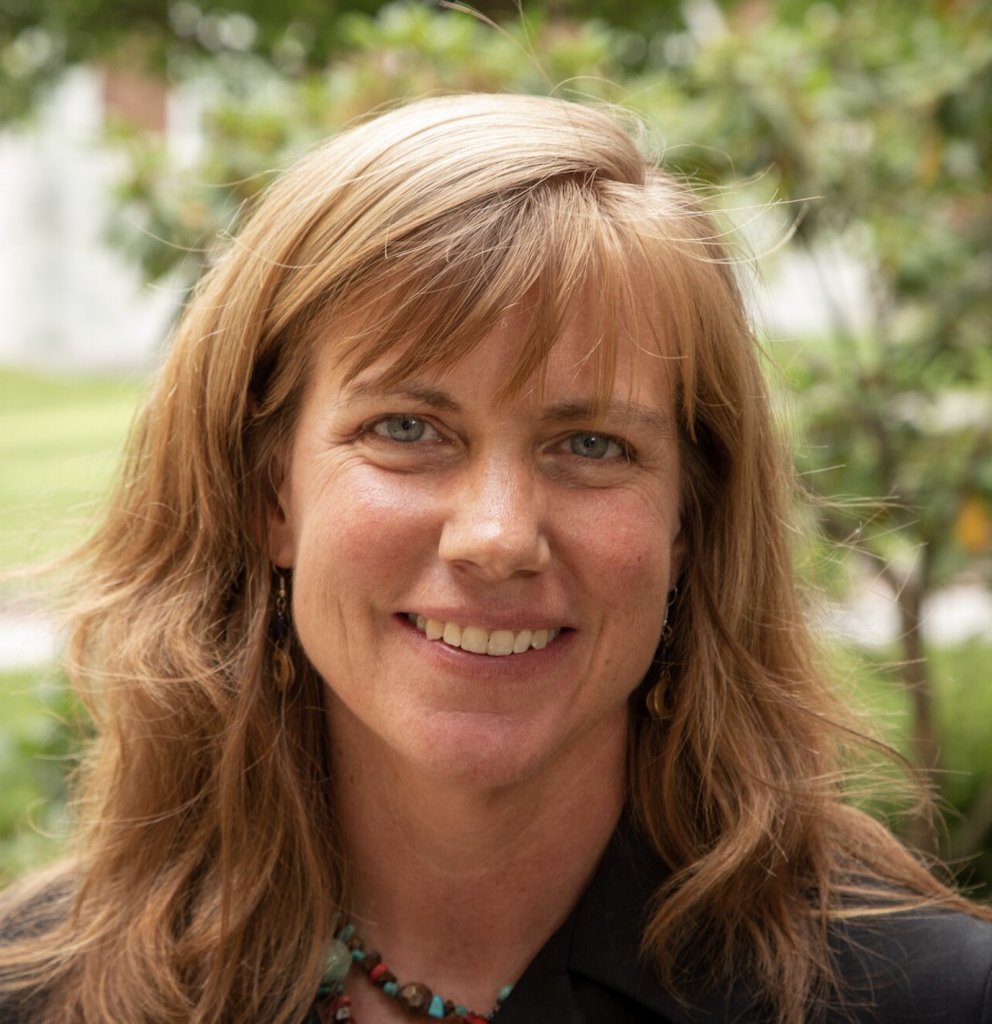
Dr. Jill DeTemple is Professor and Altshuler Distinguished Teaching Professor in the Department of Religious Studies at Southern Methodist University.  She received her B. A. in Asian Studies from Bowdoin College, her M. T. S. in Christianity and Culture from Harvard Divinity School, and her Ph.D. in Religion and Culture from the University of North Carolina at Chapel Hill.  Her research interests include faith-based economic development, Latin American religions, Pentecostalism, and the use of dialogue in classrooms to promote intellectual humility, conviction, civic engagement, and deep learning.  She is the author or co-author of three books, most recently The Dialogic Classroom: Revolutionary Listening for Curiosity, Engagement, and Deep Learning (Taylor & Francis, 2025), which focuses on a dialogic pedagogy that she hopes will help make college better for everyone.

For those wishing to join by zoom: https://drake-edu.zoom.us/j/84421474637.

Translate »