
10/26/2017: “Does ‘the God who acts’ really act? Special divine action via quantum mechanics that is objective but not miraculous”

Robert Russell
Founder and Director of the Center for Theology and the Natural Sciences and Ian G. Barbour Professor of Theology and Science, Graduate Theological Union, Berkeley
Thursday, October 26, 7:00 p.m.
Sussman Theater, Olmsted Center, Drake University
—–

Russell starts with basic concepts in a Christian theology of divine action, including miracles.  He focuses on the challenge posed by Hume to the concept of “miracle” as a violation of the laws of nature and its devastating consequences for theology in the 18th – 20th century theology.  He then describes a new way to achieve a theory of divine action in which God’s action makes an objective difference in the processes of nature without in any way being a violation of, or intervention into, these processes: “NIODA” (non-interventionist objective divine action). NIODA, in turn, requires that there be genuine openness (“ontological indeterminism”) at some level in nature.  Russell briefly describes several candidates before turning to quantum mechanics (QM).  He argues that QM offers a promising approach for NIODA and in addition, when coupled with “theistic evolution”, it allows Christian theology to view God as acting in, with and through the biological evolution of life without recourse to Intelligent Design and in a response back against claims that evolution supports atheism.


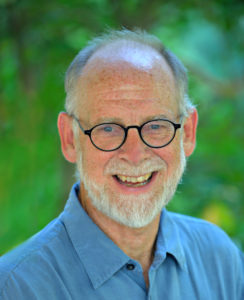
Robert J. Russell is Founder and Director of the Center for Theology and the Natural Sciences (CTNS) and the Ian G. Barbour Professor of Theology and Science at the Graduate Theological Union, Berkeley, CA. He is a leading researcher and spokesperson for the growing international body of theologians and scientists committed to a positive dialogue and creative mutual interaction between these fields. He most recent book is Time in Eternity: Pannenberg, Physics and Eschatology in Creative Mutual Interaction (University of Notre Dame Press, 2012). He has co-edited a six volume CTNS/Vatican Observatory series on scientific perspectives on divine action and the first in the new series on scientific perspectives on the problem of natural evil.  He is a founding co-editor of the scholarly journal Theology and Science which CTNS members internationally receive. Dr. Russell is an ordained minister in the United Church of Christ. He received a Ph.D. in physics from the University of California at Santa Cruz (1978) and an M.A. in Theology and an M. Div. from Pacific School of Religion, Berkeley (1972).

Video of lecture

10/08/2017: Meet My Religious Neighbor: Wat Phothisompan

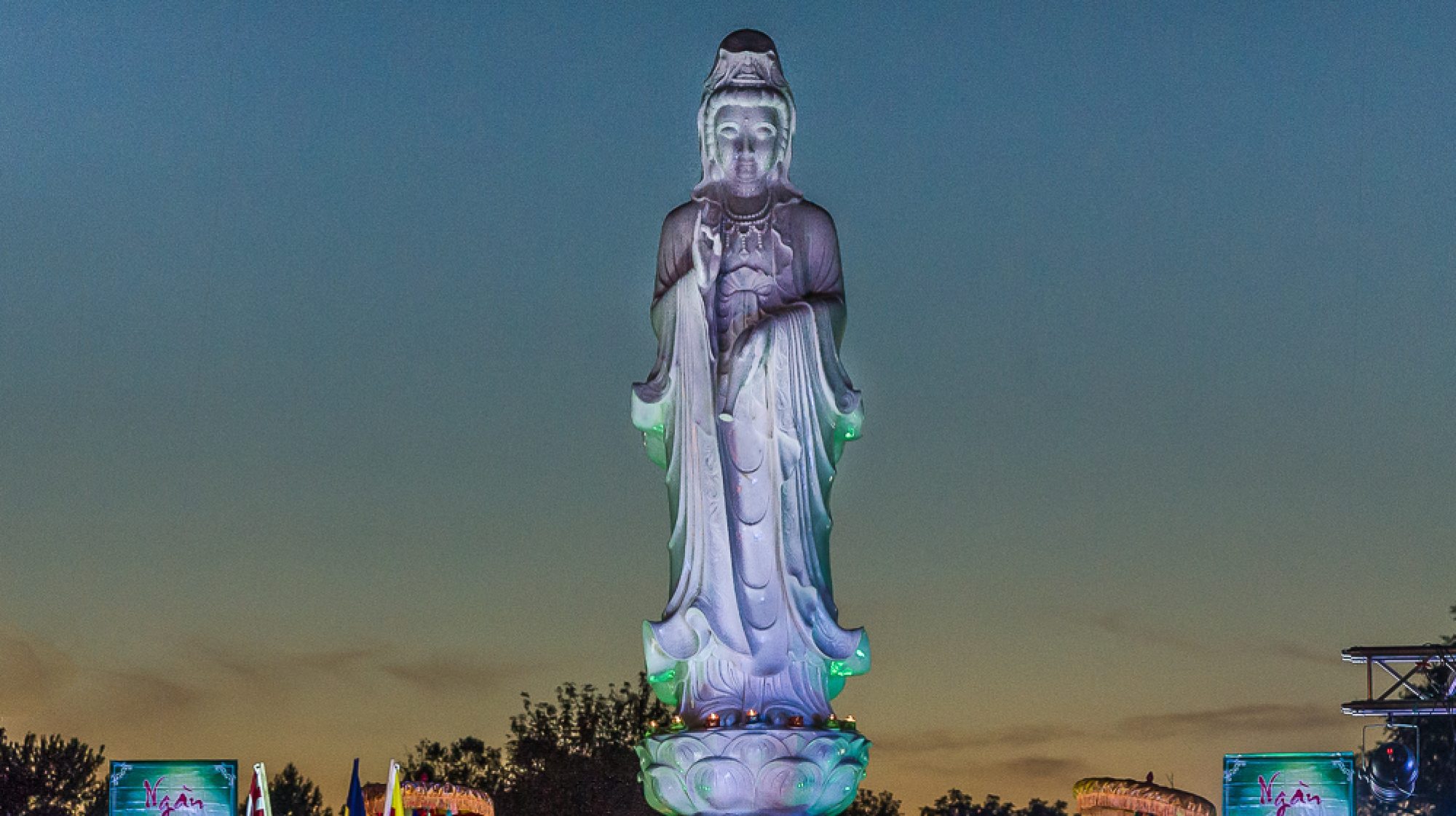
Our next “Meet My Religious Neighbor” open house is on Sunday, October 8th from 10am – 12pm. It will be held at one of the Lao Buddhist temples in Des Moines, Wat Phothisomphan, which is located at 2560 SE 14th Street.

The service will include Tak Bat, the offering of food to the monks at the temple, as well as chanting meditation, a dharma talk (“sermon”), and lunch.

Meet My Religious Neighbor is a monthly open-house series. Each open house allows the public the opportunity to tour a sacred space, learn how religion is practiced in it, and meet the congregation who worships there.

10/05/2017: Miracles as Transforming Invitations to Wonder & Gratitude: An Islamic Perspective

Umeyye Isra Yazicioglu
Associate Professor of Islamic Studies, St. Joseph’s University
Thursday, October 5, 7:00 p.m.
Sussman Theater, Olmsted Center, Drake University
—–

Miracle stories in the Quran interrupt our familiarity with the world. In fact, the Quran (not unlike other scriptures) shocks us with stories like that of virgin birth, instant healing with touch, fire not burning and a staff becoming a serpent. Why? This talk will suggest that these miracle stories in the Quran are in fact transformative invitations to wonder & gratitude. In making this point, the talk will make use of two insightful Islamic theologians, Ghazali (11th century) and Nursi (20th century), with a focus on their approach to the Quran, natural order, and human life.


Professor Yazicioglu’s research is on interpretation of the Quran in the contemporary age, Islamic theology and spirituality, with a focus on the works of a significant Muslim theologian, Said Nursi. Her book Understanding Quranic Miracle Stories in the Modern Age (Penn State University Press, 2013) brings Muslim thinkers into conversation with Western thinkers. She is also a team member of an Islamic spirituality non-profit, Receiving Nur. Yazicioglu holds an MA in Islam & Christian-Muslim Relations from Hartford Seminary and a PhD in Religious Studies from University of Virginia.

Video of the Lecture

09/14/2017: Miracles: A Philosopher’s Stance

Karen Zwier
Visiting Assistant Professor of Philosophy and Religion, Drake University
Thursday, September 14, 7:00 p.m.
Sussman Theater, Olmsted Center, Drake University
—–

Miracle stories are a phenomenon shared by all major religious traditions.  What is a rational person to think in the face of this phenomenon?  In this lecture, Professor Zwier will survey some of the ways in which philosophers have analyzed the concept of miracles and grappled with the question of the proper epistemic stance toward miracle reports.

Professor Zwier’s research deals with philosophical and scientific methodology as well as metaphysics of science. She concerns herself with questions about how—and if—metaphysical claims are engaged by empirical scientific methods. Her areas of specialty include philosophy of causation, history and philosophy of physics, and science and religion.

Video of the Lecture

Translate »