10/23/2025: Herbert Moyo, “Ukukhubazeka (Disabilities) in the Nguni Cultural Worldview”

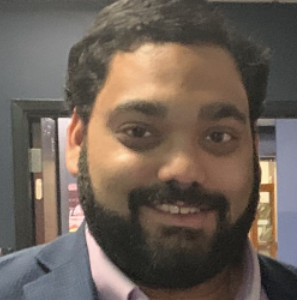
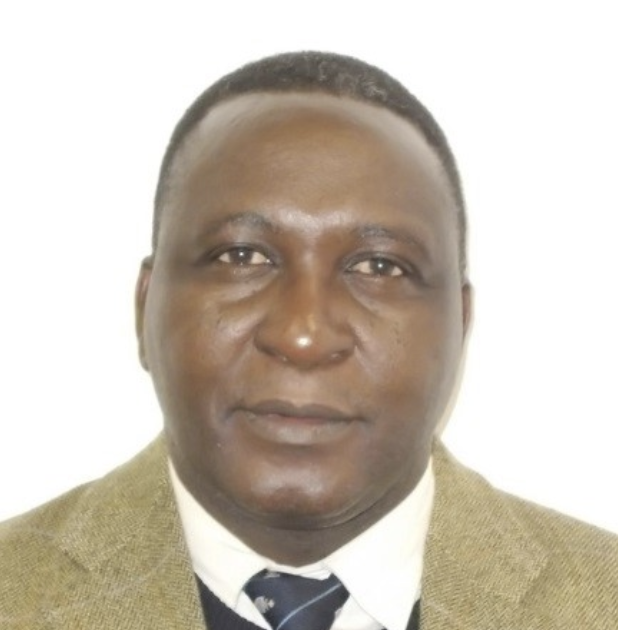
On Thursday, October 23 at 6:00 pm in the Harkin Institute (2800 University Ave), Dr. Herbert Moyo, Associate Professor of Theology at University of KwaZulu-Natal, will lecture on “Ukukhubazeka (Disabilities) in the Nguni Cultural Worldview.” 

For those wishing to attend the lecture virtually, please sign on here at least five minutes in advance: https://drake-edu.zoom.us/j/82725101694.

Herbert Moyo is an Associate Professor of Theology at the University of KwaZulu-Natal in South Africa. He is an ordained minister in the Evangelical Lutheran church. His research interests are in church and politics, pastoral care for the vulnerable in society, the praxis of African religions, Isintuism, African indigenous knowledge systems, and the philosophy of religion.

Dr. Moyo’s lecture will look at understandings, treatments, and experiences of disability among the Nguni people of southern Africa.

The Nguni are continuously positively transforming their understanding and treatment of people living with disabilities. The Nguni are made up of mainly four tribes (The Ndebele, Swati, Zulu, and Xhosa) located in Zimbabwe, Eswatini (former Swaziland), and South Africa. The languages of these tribal grouping are related, and they can communicate across the tribal groups. The customs and traditions of the Nguni are related, as they have the same roots that can be called “Isintu.”

There is no monolithic contemporary view on ukukhubazeka/ubulima (disability) among the Nguni people. Traditionally, disability from birth was viewed as a curse from ancestors, while disability after birth was mainly attributed to witchcraft. The different forms and causes of disability determine the treatment of the disabled by the family and the community. Disability associated to witchcraft was treated with empathy, as the anger of the community was directed to the witches. Disability because of a curse by ancestors, such as being born crippled or blind, was viewed as a curse against the parents, and there was no empathy for such since it was a form of punishment. The victim was be ostracized. In some instances, parents would be accused of creating the disability of their children to amass wealth, and this type of disability was given silent treatment. In contemporary contexts, however, disability is often explained as an accident therefore empathized.

This presentation will engage and expose the Isintuism around disability, showing the role played by witches, ancestors, greediness, and nature, and demonstrating a variety of perspectives and responses. This presentation will conclude by showing how the Church, education, and human development have transformed the Nguni understanding of disability over the years. Disabled people are now treated much better than in the past. Human-rights lawyers and advocates have transformed the way disability is understood and treated in line with international human-rights laws . As a result, people living with disabilities in contemporary Nguni circles are able to go to school and are employed to earn a living. All public buildings are by law required to be user friendly to different forms of disabilities.

Here is a video-recording of Dr. Moyo’s PPT and talk:

10/01/2025: “Two Idealized Cosmologies of Gender Relation in Islam,” by Zilka Spahić Šiljak 

We are honored to host a lecture on October 1, 2025 by Zilka Spahić Šiljak entitled “Two Idealized Cosmologies of Gender Relation in Islam.” The lecture will occur at 6:00 pm in Sussman Theater on the lower level of the Olmsted Center on Drake’s campus (2875 University Ave).

Two Idealized Cosmologies of Gender Relation in Islam” explores two contrasting cosmologies of gender relations within Islam: the patriarchal paradigm, which has historically dominated Islamic thought and practice, and the egalitarian paradigm, which continues to struggle for recognition and authority. Through a critical examination of the works of three male and one female progressive Muslim scholars, the lecture interrogates the foundations of gender equality in Islamic discourse. It highlights how textual fundamentalism reinforces the illusion that normative guidance is solely derived from sacred texts, while overlooking the interpretive agency of the believing community. In contrast, progressive scholars advocate for a performative and dynamic relationship with the text, one that emphasizes contextual reading, ethical responsibility, and communal engagement. This approach challenges hegemonic interpretations and opens space for more inclusive and egalitarian readings of Islamic tradition.

Dr. Zilka Spahić Šiljak, Associate Professor at the University of Sarajevo, is a scholar and activist from Bosnia and Herzegovina. She holds a Ph.D. in gender studies, MA in human rights and BA in religious studies. She was lecturer and research fellow at Harvard University, Stanford University,  Arizona State University, Pittsburgh University and several universities in Europe. Her interdisciplinary research focuses on the intersection of religion, gender, politics, and peacebuilding, with a particular emphasis on interdisciplinary and interreligious feminist thought. In 2021 she launched FER (Feminism and Religion) online school at University of Sarajevo. She is director of the TPO Foundation and founder of the University Gender Resource Center (UNIGeRC) in Sarajevo. She is the author and editor of numerous books and articles on gender justice, religion, and gender-based violence and leadership.

09/25/2025: Devan Stahl, “The Protestant Work Ethics, Eugenics, and Quality of Life Measures” 

On Thursday, September 25, at 6:00 pm in the Harkin Institute (2800 University Ave), Dr. Devan Stahl, Associate Professor of Bioethics and Religion at Baylor University, will lecture on “The Protestant Work Ethics, Eugenics, and Quality of Life Measures.” 

For those wishing to attend the lecture virtually, please sign on here at least five minutes in advance: https://drake-edu.zoom.us/j/81656501933.

Modern medicine is committed to maintaining and enhancing patients’ quality of life, but what exactly is meant by the term “quality of life” can be ambiguous and can sometimes work to the detriment of people with disabilities. What constitutes a high or low quality of life, who determines the quality of life, and how such judgments should be used in medicine are all contested questions. How clinicians understand quality of life has profound implications for all people who use health care; however, it is of particular importance to people with disabilities who are often assumed, against evidence to the contrary, to have a low quality of life and therefore to be less deserving of access to scarce medical resources.

This presentation will explore the conceptual roots of quality of life judgments in medicine with a particular focus on the influence of religion, particularly American Protestantism, in shaping our views of what makes a life valuable and worth living. Drawing upon her research in her book Disability’s Challenge to Theology: Genes, Eugenics, and the Metaphysics of Modern Medicine, Dr. Devan Stahl will explore how the Protestant approaches to Scripture and nature helped to produce not only the Scientific Revolution, but also the American eugenics movement. In the early 20th century, many liberal Protestants were eager to bring about the Kingdom of God by aligning themselves with medical scientists who wished to rid society of people who were determined to be “unfit” based upon their ideas of what made for a good and upright citizen. Although eugenics was condemned in the mid-twentieth century after the atrocities of Nazi Germany were exposed, notions of what it means to be “fit” remain and have implications for the practices of contemporary medicine.

Devan Stahl is an Associate Professor of Bioethics and Religion at Baylor University and Adjunct Associate Professor in the Department of Education, Innovation, and Technology at the Baylor College of Medicine. She received her Ph.D. in Health Care Ethics from St. Louis University and her M.Div. from Vanderbilt University. She specializes in theological bioethics, disability ethics, and the visual arts within medicine. Dr. Stahl also volunteers as a clinical ethicist consultant for the Supportive and Palliative Care Team at Baylor, Scott, and White Hillcrest and has trained as a hospital chaplain. Dr. Stahl is the cohost of the popular podcast Bioethics for the People, now in its sixth season. She is the author and editor of several book including, Imaging and Imagining Illness: Becoming Whole in a Broken Body (Cascade Books), Disability’s Challenge to Theology: Genes, Eugenics, and the Metaphysics of Modern Medicine (Notre Dame Press), and Bioenhancement Technology and the Vulnerable Body: A Theological Engagement.

Below please find a recording of Prof. Stahl’s presentation

Translate »