

Global Philosophy of Religion in the Local Des Moines Community
 Translating the Ineffable: How Hunters Hear and Talk to the Dead in Côte d’Ivoire
Lecture by Joseph Hellweg, Associate Professor of Religion, Florida State University
Thursday, March 27, 7:00 p.m., Cowles Library Reading Room
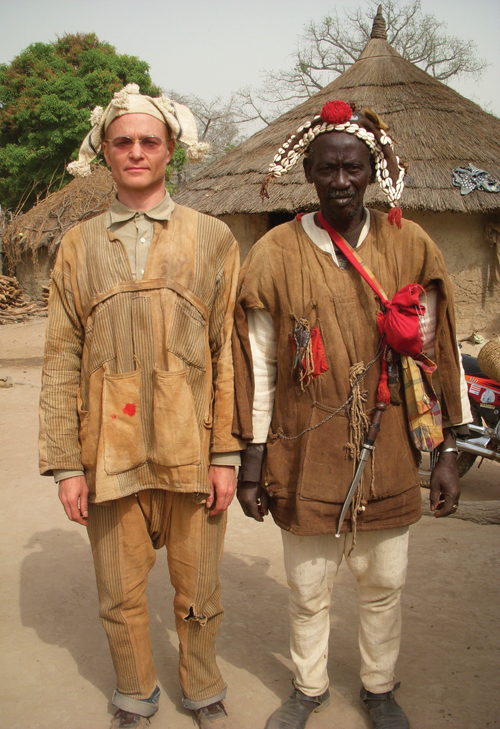
In the northwestern, Muslim area of Côte d’Ivoire (Ivory Coast), hunters communicate with a forest spirit, Manimory, and the spirits of other dead hunters through ritual sacrifices. The goal is to assure safe hunting. Since spirits cannot speak human language, they communicate through divinatory signs. They also send dreams to hunters. Hunters then translate these signs of the ineffable into human terms in order to hunt. Jewish, Christian, and Muslim theologians, in contrast, associate the ineffable with God on high. For theologians, talk of ineffability reflects the assumption that God is beyond human understanding. For hunters in Côte d’Ivoire, however—who also practice Islam—the spirits of dead hunters link them to God because, they say, the forest spirit, Manimory, descended from Abraham. Ineffability, in their case, reflects the sacred nature of local, practical pursuits like hunting as much as God’s transcendence.
Joseph Hellweg is Associate Professor of Religion at Florida State University. A cultural anthropologist by training, he has done over five years of field research in Côte d’Ivoire, Guinea, and Mali. His first book, Hunting the Ethical State: The Benkadi Movement of Côte d’Ivoire, chronicled a security movement manned by West African hunters. He is now writing a second book about these hunters titled, Practical Religion: Hunting, Islam, and the Poetics of Action in the Songs of Dramane Coulibaly; it examines the praise-songs and epics that hunters sing. He has also written a book in French on anthropological research methods. More recently, he has been studying the African-invented N’ko alphabet in Guinea and Mali. His article on the literacy movement linked to this alphabet appeared in the collection, Living the City in Africa. He does his research in French and Malinké, which he speaks fluently.
Watch the video of Hellweg’s talk:
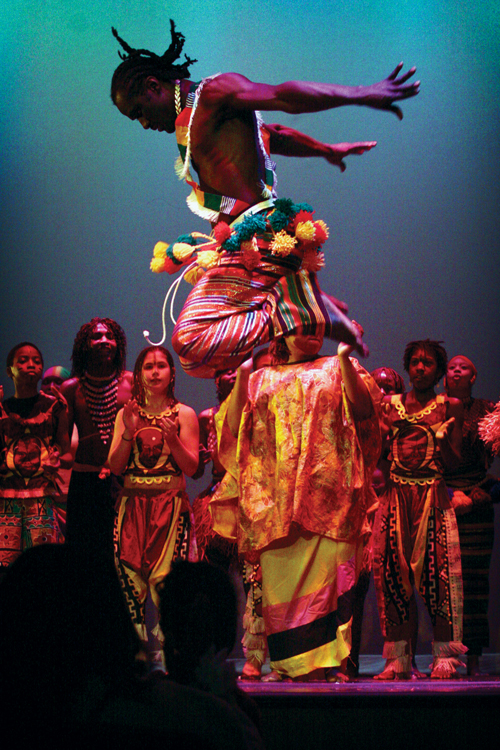
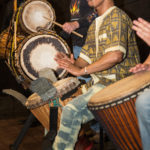
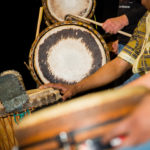
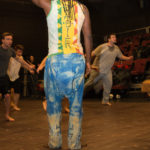
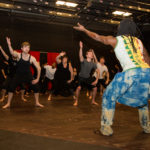
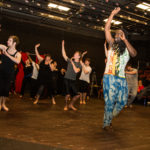
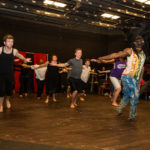
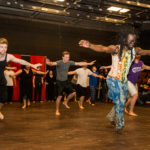
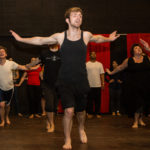
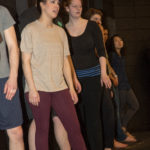
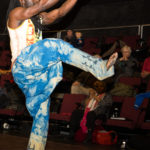
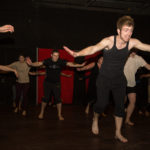
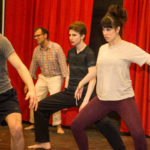
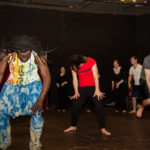
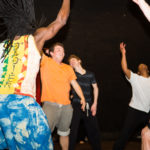
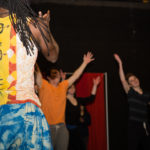
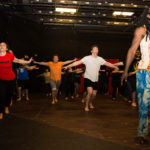
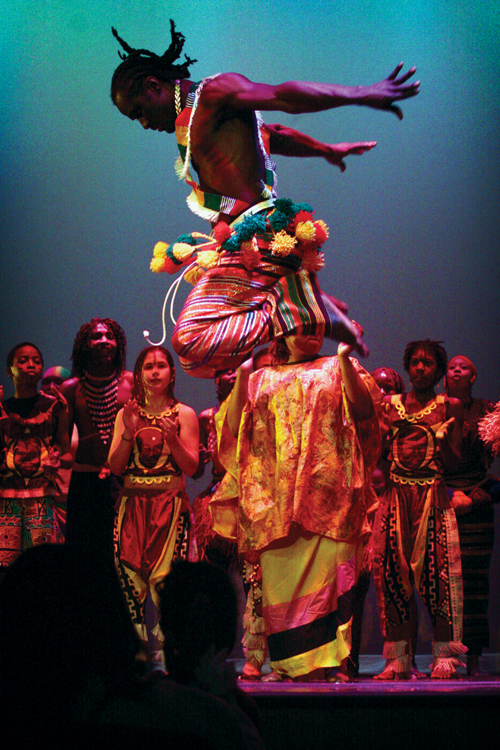 West African Dance Workshop with Diadié Bathily, Dancer, Caph Guéï, Drummer and introduction and interpretation by Joseph Hellweg
Friday, March 28, 12:15–1:45 p.m.
Studio 55 Theater, Harmon Fine Arts Center
The workshop will cover the study of West African dance and the accompanying music. Special emphasis will be placed on the dance, drumming, culture, language and arts of Ivory Coast, Guinea and Ivory Coast. It will consist of lecture and demonstration followed by active participation by students, primarily dancing and learning about the music. Students will build technique and develop an appreciation and understanding of the relevant resources available and how to research within them.
Diadié (pronounced Jah-Jay) Bathily has danced professionally for over 30 years on stages in Africa, Europe and North America. He is a world-renowned dancer, choreographer, instructor and costume designer. Bathily has conducted master classes and workshops throughout Europe and North America and has performed with or choreographed for such notable companies as the Cleo Parker Robinson Dance Ensemble, the Katherine Dunham Centers for Arts & Humanities, Ecole de Danse et d’Echange Culturel with Ms. Marie Rose Guiraud, and Broadway Dance Center. He is the recipient of the N’gowa Prize for dance on the Ivory Coast and has performed at the United Nations, the Village of Arts and Humanities in Philadelphia and many festivals and events around the United States.
In 2003, he founded his own non-profit dance company, Afriky Lolo (Star of Africa) with troupes for adults, adolescents and children. They have performed and presented workshops all over the United States. Bathily was a guest choreographer and performer at Florida State University in Tallahassee, Florida and a visiting choreographer at Malcolm X College in Chicago. He also founded a satellite troupe of Afriky Lolo in Chicago.
See photos from the Dance Workshop
Watch a video of the dance workshop:
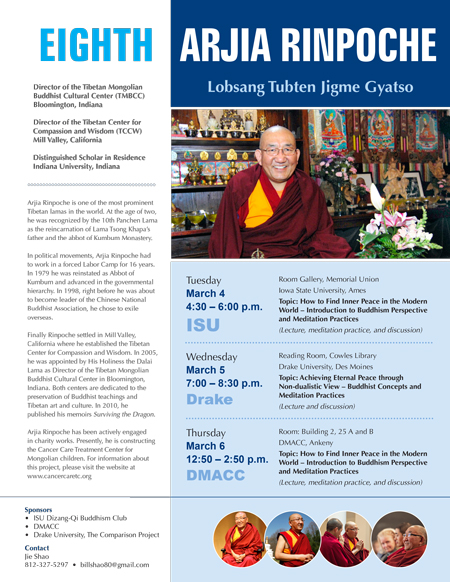
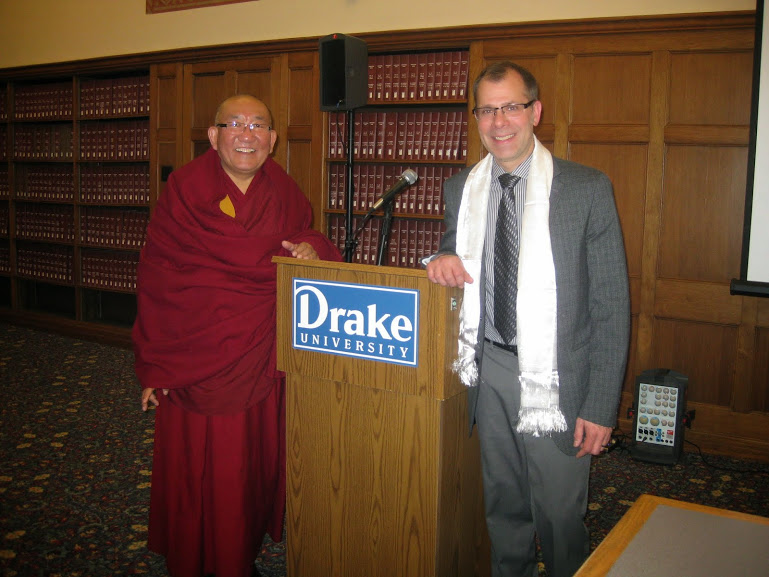
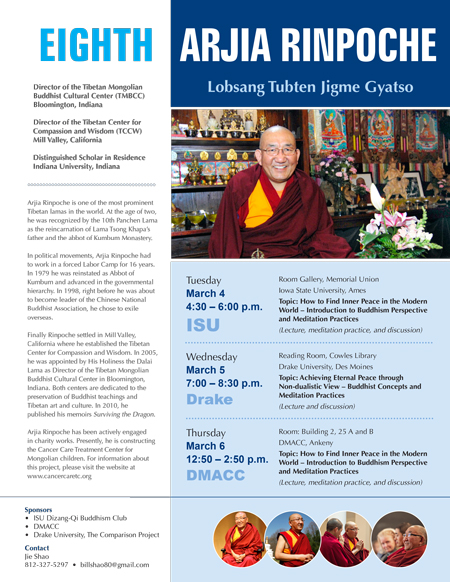 Lecture and discussion with the eighth Arjia Rinpoche, Lobsang Tubten Jigme Gyatso
Wednesday, March 5, 7:00 p.m. Cowles Library Reading Room
Arjia Rinpoche is one of the most prominent Tibetan lamas in the world. At the age of two, he was recognized by the 10th Panchen Lama as the reincarnation of Lama Tsong Khapa’s father and the abbot of Kumbum Monastery.
In political movements, Arjia Rinpoche had to work in a forced Labor Camp for 16 years. In 1979 he was reinstated as Abbot of Kumbum and advanced in the governmental hierarchy. In 1998, right before he was about to become leader of the Chinese National Buddhist Association, he chose to exile overseas.
Finally Rinpoche settled in Mill Valley, California where he established the Tibetan Center for Compassion and Wisdom. In 2005, he was appointed by His Holiness the Dalai Lama as Director of the Tibetan Mongolian Buddhist Cultural Center in Bloomington, Indiana. Both centers are dedicated to the preservation of Buddhist teachings and Tibetan art and culture. In 2010, he published his memoir Surviving the Dragon.
Arjia Rinpoche has been actively engaged in charity works. Presently, he is constructing the Cancer Care Treatment Center for Mongolian children.
This event is sponsored by:
Contact: Jie Shao 812-327-5297 • billshao80@gmail.com
Listen to audio of Rinpoche’s talk: