

04/04/2013: Innovative Jewish Responses to Holocaust

Thursday, April 4 at 7:00 p.m., Olin 101 

8 September 2011, CAHS Fellows stand for their informal portraits
Photo courtesy of the USHMM

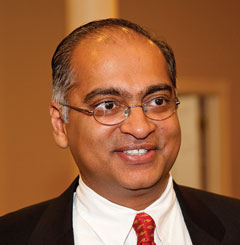
Steven T. Katz is Director of the Elie Wiesel Center for Judaic Studies and Chair in Jewish and Holocaust Studies at Boston University. He has also taught at Dartmouth College, Cornell University, and at numerous other universities both in the US and abroad. In addition, Dr. Katz is presently the Chair of the Holocaust Commission of the Memorial Foundation for Jewish Culture and the Academic Advisor to the Academic Working Group of the International Holocaust Remembrance Alliance.

Dr. Katz has published over 100 articles in scholarly journals in the fields of Judaica, Holocaust studies, philosophy of religion, and comparative mysticism, and has lectured all over the world. In 1999 he was awarded the University of Tübingen’s Lucas Prize for Holocaust studies. And his most recent book, Wrestling with God: Jewish Theological Responses During and After the Holocaust, was selected as the runner-up for the 2007 National Jewish Book Award. He is currently the editor of the journal, Modern Judaism.

Dr. Katz’s lecture will review and critique the main Jewish theological responses to the Holocaust and the “problem of evil.” It will include six responses that are, essentially, based on the adaptation and recycling of biblical explanations as to why the righteous suffer. After this opening analysis, he will turn to the five or six responses that present a novel “modern” accounting. This second group will include the views of Richard Rubenstein, Emil Fackenheim, Eliezer Berkovitz, Ignaz Maybaum, Emanuel Levinas, and Elie Wiesel.

Listen to Katz’s lecture:

Here is the section of Dr. Katz’s “Wrestling with God” upon which his lecture drew

03/07/2013: Above + Beyond Cancer’s Journey to the High Himalaya: Creative Nonfiction Narratives of Recovery, Discovery, and Advocacy


ABC group

Thursday, March 7 7:30 p.m. in the Cowles Library Reading Room for a creative nonfiction reading by Ruth Bachman and Andy Fleming, two member of Above + Beyond Cancer’s recent journey to the High Himalaya.

Writers will read from the creative nonfiction narratives inspired by their recent trek through the High Himalaya with Above + Beyond Cancer. These narratives are part of an ongoing Drake and Above + Beyond Cancer Community Writing Project.

This event is free and open to the public.

For more information, please contact Yasmina Madden at yasmina.madden@drake.edu

Listen to audio from the presentation:

A Guide to the Supplementary Resources for 2012-2013

Below you will find supplementary resources pertinent to The Comparison Project’s 2012-2013 theme of Religious Responses to Suffering. These resources come from students in Prof. Knepper’s Fall 2012 Comparative Religions course and Spring 2013 Philosophy of Religion course. They are ordered from most recent (top) to least recent (bottom).

The Fall 2012 Comparative Religions course first examined then compared religious responses to suffering in Sikhism, Lakota traditions, and Islam. Below you will find some of their analytic and comparative papers as well as a few of their encyclopedic entries.

The Spring 2013 Philosophy of Religion first examined religious responses to suffering in Christianity, Judaism, and Buddhism, then compared and evaluated religious responses to suffering in all six of the religions considered in 2012-2013. Below you will find some of their comparative-evaluative papers.


Student Comparisons (Fall 2012 Comparative Religions)

After studying Sikh, Lakota, and Muslim responses to suffering throughout the Fall 2012 Semester, students in Professor Knepper’s class were tasked with performing unique comparisons of their own design on some aspect of these three faiths and their responses to suffering. These papers were designed to ask students to think critically about the similarities and differences of religious responses to suffering between these three faiths, and to come to some insightful conclusions about what the implications of these similarities and differences are. Some of these essays, which were wide-ranging and creative, can be found below:

Translate »